Key Takeaways
- Cash laddering provides a structured approach to meeting near-term spending needs in retirement with liquidity and flexibility considerations.
- Understanding the myths, risks, and how laddering compares to other strategies empowers you to make informed retirement planning decisions.
Planning how to turn your savings into reliable income is one of the most important challenges you’ll face in retirement. Cash laddering is often mentioned as a solution for near-term spending, but separating fact from fiction can help you decide if it fits your financial plan. Let’s explore what cash laddering is, why it’s used, and what to know before making it part of your retirement strategy.
What Is Cash Laddering in Retirement?
Definition of cash laddering
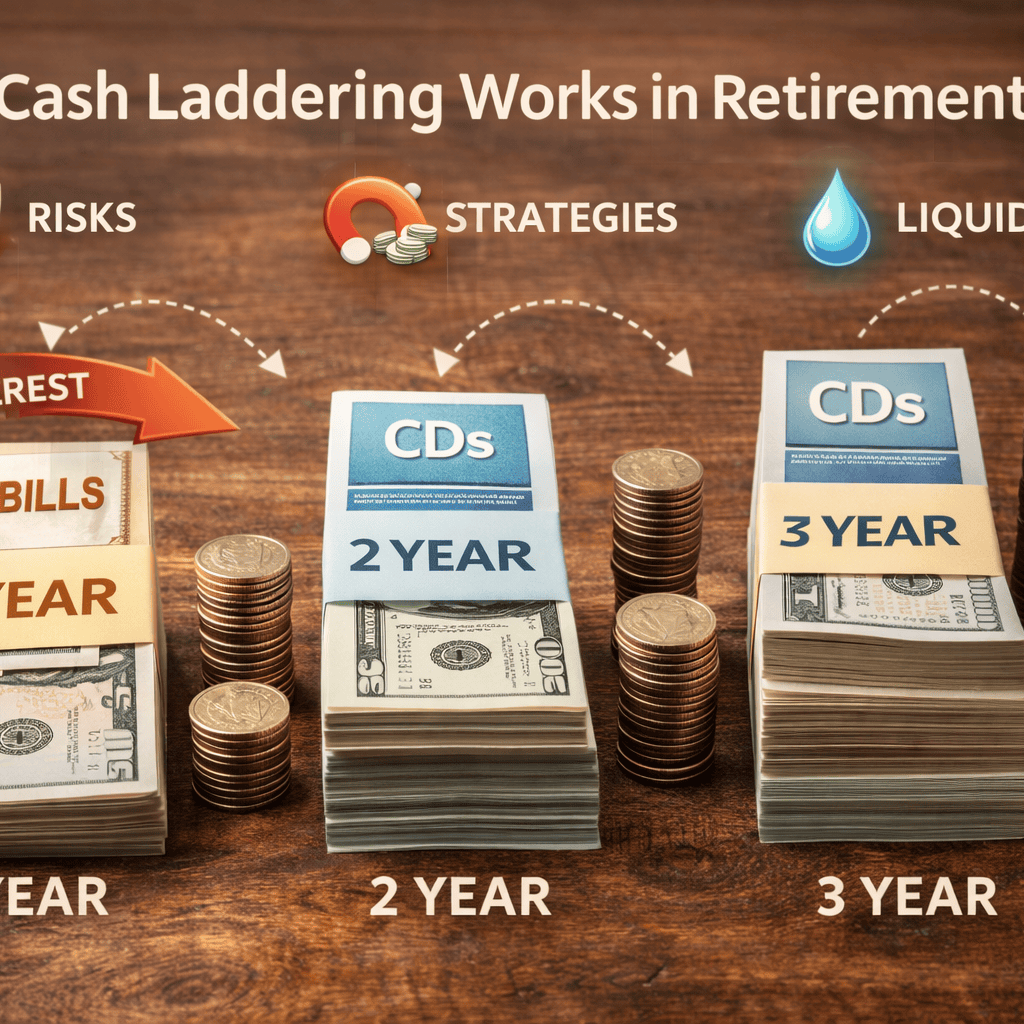
Cash laddering in retirement refers to structuring your savings so that a portion becomes available at regular, pre-determined intervals. Think of a “ladder” of cash or other low-risk holdings, where each “rung” matures or comes due just as you need to make a planned withdrawal. This method aims to match your spending needs with liquid cash over a set number of years, typically the early phase of retirement when income predictability is crucial.
Common approaches for retirees
Retirees often build ladders with holdings maturing every year or on another regular schedule. The most common approaches use instruments with fixed maturity dates or easily accessible cash accounts, earmarking each rung to cover one year’s expenses. The remaining funds are usually left to grow for future needs or longer-term spending. This method can create a sense of order, with each year’s income essentially “locked in” ahead of time.
Why Consider Laddering for Near-Term Needs?
Matching spending timelines
You likely have anticipated expenses for the first several years of retirement—housing, healthcare, travel, or everyday living costs. By setting up a ladder, you ensure a designated pool of cash is available each year. This alignment of spending and liquidity can provide greater peace of mind and potentially reduce the risk of having to sell longer-term assets at an inopportune time.
Managing sequence-of-withdrawal risk
The order in which you withdraw funds from your savings matters, especially if markets are volatile. Sequence-of-withdrawal risk is the risk that taking withdrawals during market downturns can deplete your assets faster than expected. With a cash ladder, you avoid selling investments during market lows to fund near-term needs, helping protect the portion of your portfolio earmarked for later years.
What Are Common Myths About Cash Laddering?
Misunderstandings about safety
A frequent myth is that cash laddering eliminates all risk or guarantees your near-term spending will be covered no matter what. In reality, while cash ladders can offer predictability for planned expenses, they remain subject to other factors such as inflation or changes in your actual spending. No approach can be entirely risk-free.
Assumptions about returns
Some believe cash ladders will always outperform other short-term strategies. However, cash holdings and similar low-risk instruments generally provide lower growth potential than broadly invested portfolios. That means you may be trading higher potential long-term returns for certainty and reduced volatility in the short term. Laddering can help smooth cash flow, but it does not promise enhanced returns.
Key Facts Every Retiree Should Know
Cash ladders and liquidity
One of the most attractive features of cash laddering is its focus on liquidity. When each rung of the ladder matures, you have cash on hand to spend. This setup makes it less likely you’ll need to sell assets on short notice. Liquidity is both a benefit and a consideration, as holding more in cash can mean less exposure to growth.
Flexibility and limitations explained
Cash ladders can be flexible, allowing you to adjust timelines and amounts as your situation evolves. However, they’re not without limits—if your spending increases unexpectedly or if interest rates change, you may need to rework your ladder. It’s also important to understand that liquidity comes at a cost: holding cash or cash-like instruments for extended periods can mean missing out on growth opportunities elsewhere in your portfolio.
How Does Laddering Compare to Other Strategies?
Systematic withdrawals overview
A common alternative is the systematic withdrawal strategy. Here, you regularly withdraw a set percentage or dollar amount from your retirement portfolio, regardless of how investments have performed. This approach can work well when combined with a well-diversified portfolio, but withdrawals during a down market can increase the chance of running out of money earlier than planned.
Bucket strategies summarized
Another popular method is the bucket strategy. With a bucket strategy, you divide your retirement savings into several buckets—typically one for short-term needs (cash or cash-like assets), another for intermediate-term, and a final bucket for long-term growth. Cash laddering often forms part of the short-term bucket, providing a bridge from liquid reserves to more growth-oriented investments as you move through retirement.
Each strategy comes with trade-offs. Cash laddering focuses on providing predictable, short-term cash flow. Systematic withdrawals and bucket approaches balance short- and long-term needs differently, often using market-based assets to seek growth for the future.
What Should You Watch Out For?
Potential risks and trade-offs
No retirement income strategy is perfect. For cash laddering, you should be aware of the risk of being too conservative and missing out on the growth that market-based investments can provide over time. There’s also the practical challenge of managing maturities and ensuring you have enough to cover yearly needs, especially if costs change.
Evaluating changing needs over time
Your situation won’t stay the same through retirement. Health, goals, and unexpected expenses can all shift, sometimes quickly. A cash ladder built on assumptions from one stage of life may need to be updated as circumstances change. Reviewing and adjusting your plan regularly helps keep it aligned with your current needs and longer-term goals.