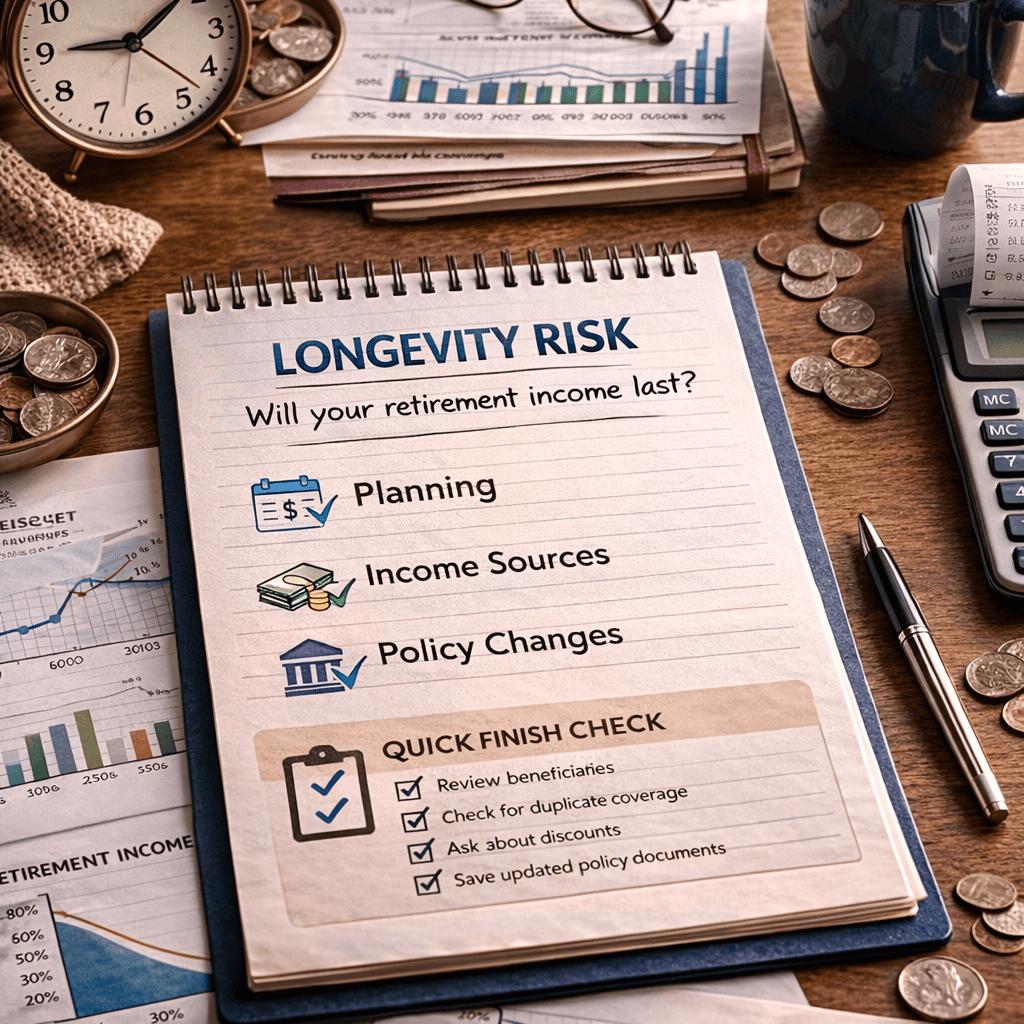
Key Takeaways
- Understanding longevity risk is crucial for planning sustainable retirement income and avoiding financial shortfalls later in life.
- Blending diverse income sources and maintaining flexibility can help address longevity risk and improve long-term financial stability.
Living longer is a sign of progress, but it brings unique challenges for your retirement. Longevity risk—outliving your money—requires careful planning to preserve both your income and peace of mind. Let’s explore how you can prepare for a secure retirement, no matter how long it lasts.
What Is Longevity Risk?
Definition and overview
Longevity risk means the possibility of outliving your financial resources during retirement. This type of risk grows as life expectancies increase and traditional sources of lifetime income, like pensions, become less common. Unlike some financial risks that have clear start or end points, longevity risk remains uncertain because no one can predict exactly how long they will live.
Why it matters for retirees
Longevity risk is central to retirement planning because it impacts every financial decision you make as you transition from working years to your retirement lifestyle. If you underestimate your time in retirement, you may face income shortfalls later in life. Recognizing this risk helps you plan for enough savings and judicious spending throughout all your retirement years—not just the early ones.
How Does Longevity Risk Affect Retirement?
Potential impacts on retirement income
The longer you live, the more resources you may need. Longevity risk can quietly erode your retirement plan by stretching your withdrawals over a longer period than initially expected. Unexpected medical expenses, rising costs of living, and extended time spent in retirement further amplify the risk of running out of money.
Challenges for long-term financial stability
Beyond just income, longevity risk also affects your long-term financial stability. You may need to adjust spending habits, delay or change plans, and reconsider the safety of drawing on your investments. Preparing for these challenges early means you’re less likely to face difficult choices later. It also gives you more options for adapting along the way.
Key Concepts in Retirement Income Planning
The role of personalized spending plans
Effective retirement planning starts with a clear understanding of your anticipated expenses and needs. Building a personalized spending plan means tracking essentials like housing, food, health care, and insurance as well as discretionary expenses like travel or hobbies. This level of planning allows you to spot gaps, prepare for unexpected costs, and make confident withdrawal decisions as you age.
Managing withdrawals and spending rates
Your withdrawal rate—how much you take from your savings each year—directly affects how long your money lasts. Experts often recommend cautious withdrawal rates, regularly reviewed and adjusted for changing circumstances. Rather than sticking to a fixed percentage, it’s smart to stay flexible and adapt as needed. This may even mean reducing spending temporarily during market downturns or periods of high inflation.
Which Strategies Can Address Longevity Risk?
Diversifying retirement income sources
Depending on a single source of income can be risky in retirement. Blending different types of income—such as personal savings, public retirement benefits, and, where applicable, private pension plans—improves resilience. This approach can help fill in gaps if one source becomes less reliable or is affected by market changes. It also helps buffer against unexpected expenses or longer lifespans.
Optimizing use of public retirement benefits
Government programs, such as Social Security and Medicare, provide a foundation for retirement income. Understanding how these work is essential to getting the most from them. Consider factors like when to start collecting benefits and how future policy changes could impact what you receive. Staying informed about your options and the eligibility rules ensures you’re maximizing predictable, steady sources of income through all retirement years.
Flexible budgeting approaches
Building flexibility into your budget can provide a safety net against longevity risk. This means regularly revisiting your expenses and being ready to change course if your health, lifestyle, or financial outlook shifts. Flexible budgeting also allows you to prioritize spending that brings the most value and adjust discretionary spending as circumstances change.
Are There Non-Financial Considerations?
Lifestyle and health planning
Financial security is only part of a healthy, fulfilling retirement. Paying attention to nutrition, exercise, preventive care, and a safe living environment can help you stay healthy and independent longer. Staying proactive with health care decisions often reduces costs and stress later on, potentially minimizing financial pressures. Proper health planning supports a higher quality of life and allows you to enjoy your retirement years.
Staying socially and mentally engaged
Social and mental engagement are just as important as physical health for long-term well-being. Maintaining connections with friends, family, or community groups can reduce feelings of isolation. Participating in learning opportunities or volunteering supports brain health and can even delay cognitive decline. Together, these non-financial factors help you thrive during retirement and minimize the stress that uncertain finances may bring.
How to Stay Informed About Retirement Risks
Resources for ongoing education
Staying up to date with retirement topics empowers you to make better decisions. Educational content from reputable sources—such as public agencies, university research, and non-profit organizations—can help clarify concepts and keep you informed of current trends. Self-education is a lifelong process, and new insights can make a significant difference in your long-term outcomes.
Monitoring changes in retirement policies
Retirement-related policies change over time, and it’s important to track regulations that may impact Social Security, Medicare, or other public benefits. This allows you to react appropriately and adjust your plan if needed. Subscribing to trustworthy news outlets and official government updates can help you monitor these changes and factor them into your retirement strategies.