Key Takeaways
- Retirees face unique identity theft risks due to targeted digital and physical tactics from criminals.
- Adopting practical habits and proven security measures can significantly reduce exposure to identity fraud.
Did you know retirees are among the top targets for identity theft due to increased online activity and complex financial accounts? As digital tools expand, staying informed about the threats and practical protections available is essential for maintaining peace of mind and financial dignity in retirement.
Identity Theft Risks Facing Retirees
Common tactics used by cybercriminals
Identity thieves often use sophisticated tactics to access sensitive information. Phishing emails, deceptive phone calls, fake websites, and social engineering are some of the primary tools in their toolkit. Malicious links sent by email or text can lead to malware on your devices, while phone scammers may impersonate government agencies or trusted contacts to extract personal details. Criminals may also intercept mail or attempt to steal physical documents to gain access to critical retirement records.
Why retirees are targeted
Retirees are considered prime targets because they often manage multiple financial and healthcare accounts—ranging from retirement savings accounts to Social Security—and may be less familiar with emerging security threats. The value of these accounts, combined with possible unfamiliarity with evolving scams, increases the likelihood of a successful attack. Additionally, retirees often possess stable credit histories, making stolen identities especially attractive to fraudsters.
What Are Identity Theft Protections?
Understanding personal security measures
Identity theft protections refer to the strategies, habits, and tools you use to guard your sensitive information against unauthorized access and fraud. These could be as straightforward as strong password creation or as comprehensive as monitoring your accounts regularly for signs of suspicious activity. Understanding these measures helps you set up barriers that deter would-be criminals.
How protections support retirement stability
Effective identity protections play a crucial role in preserving your financial well-being during retirement. They reduce the risk of unauthorized transactions, benefit fraud, or credit damage, all of which can disrupt your planned standard of living. By proactively adopting protection measures, you help ensure that your retirement savings and benefits are preserved, sustaining your retirement income and long-term peace of mind.
How Can Retirees Safeguard Personal Data?
Daily habits for digital security
Your daily digital habits are one of the strongest lines of defense against identity theft. Some trustworthy practices include:
- Regularly updating software and security patches on your devices
- Using unique, complex passwords for each account
- Avoiding public Wi-Fi for sensitive activities, like logging in to financial accounts
- Logging out from accounts after each use
- Being cautious about clicking on unsolicited emails or text messages
These recurring actions greatly reduce your exposure to cyber threats.
Physical document safety strategies
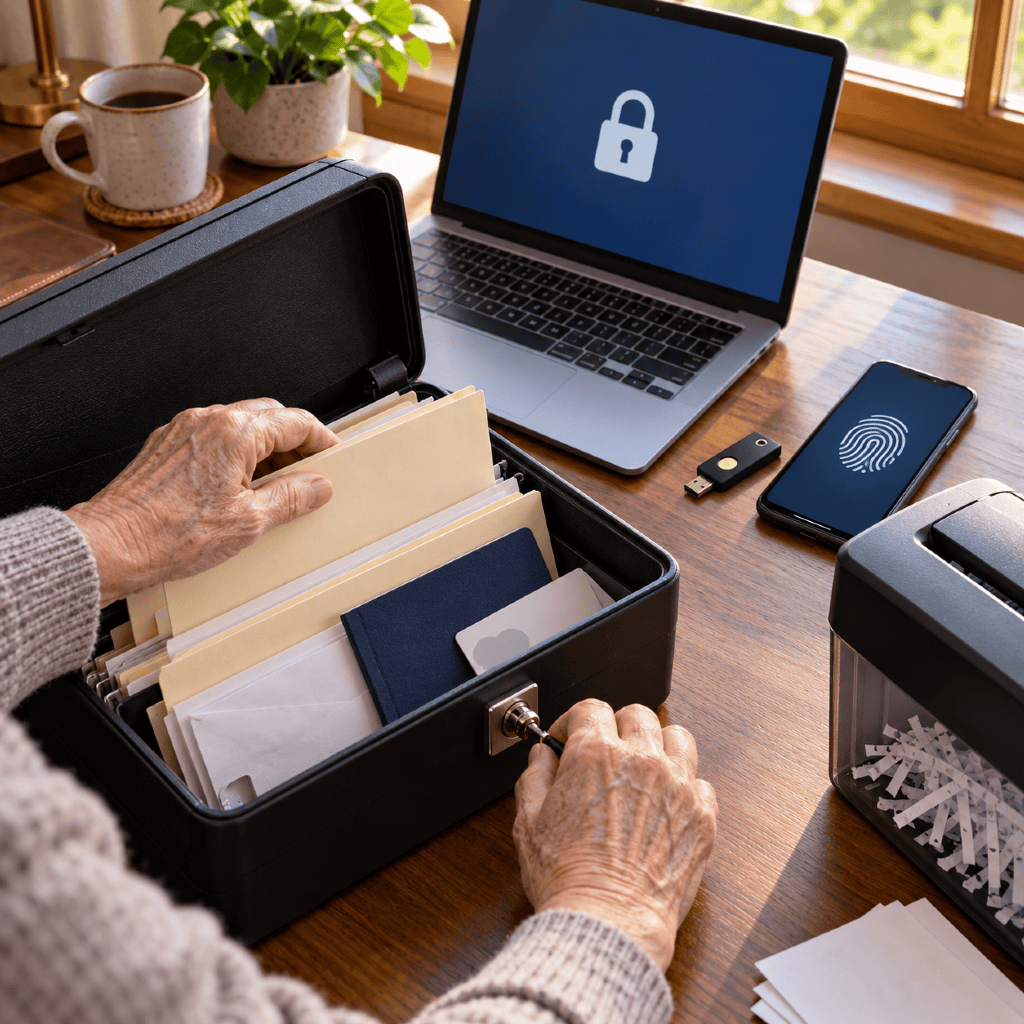
Maintaining control over your physical documents is as important as your digital habits. Always store Social Security cards, Medicare documents, and financial statements in a secure, locked location. Shred outdated or unneeded sensitive papers before discarding them. When possible, opt for electronic statements from trusted sources to minimize paper trails, and promptly collect mail to prevent theft from mailboxes.
Top 5 Security Measures Explained
Two-factor authentication basics
Two-factor authentication (2FA) adds a critical extra layer of security to your digital accounts. With 2FA, access requires something you know (like a password) and something you have (such as a temporary code sent to your device). This approach makes it extremely difficult for criminals to break into your accounts without access to your devices, even if they somehow learn your password.
Password management approaches
Managing passwords can be challenging if you have multiple accounts. Consider using a reputable password manager—a tool that stores and generates strong, unique passwords for each site. Avoid reusing passwords and change them regularly. Password managers can also alert you to potential data breaches, helping you respond quickly if your credentials are ever at risk.
Regular account monitoring practices
Frequent review of your financial and healthcare account activity is essential. Check statements monthly for unauthorized transactions or unexpected changes. Many institutions now offer alerts triggered by unusual account behavior. Early detection is key; the sooner you notice suspicious activity, the easier it is to respond and limit damage.
Safe online behavior guidelines
Smart online habits greatly reduce your identity theft exposure. Always verify website addresses before entering information and avoid providing sensitive details in response to unsolicited requests. When using social media, avoid oversharing personal information—such as birthdays, travel plans, or family details—that could be leveraged for fraud.
Recognizing suspicious communications
Retirees should remain vigilant against emails, calls, or texts requesting personal information or immediate action. Scammers often create a false sense of urgency or impersonate official sources. Genuine organizations rarely demand sensitive details through unsolicited contact. When in doubt, independently verify contact details using official websites or documentation before responding.
What to Do If Identity Theft Occurs?
Immediate first steps
If you suspect identity theft, act immediately. Change passwords to compromised accounts and enable two-factor authentication where available. Notify affected account providers and document any suspicious activities and communications. This creates a record that may be needed for subsequent recovery steps.
How to report and recover
Report identity theft to relevant government agencies and credit bureaus to place fraud alerts. Retain all correspondence related to your case and consider freezing your credit to prevent further misuse. Follow up with any service providers, such as insurance or healthcare offices, to ensure your information and benefits are protected through the recovery process. Continue to monitor all accounts closely for additional suspicious activity.
How Identity Theft Impacts Retirement Security
Long-term consequences for retirees
Identity theft can have serious and persistent effects on your retirement. Unresolved fraud can disrupt regular income streams, impact healthcare access, and result in denied credit or long-term financial headaches. The time required for recovery can also divert attention and emotional energy during what should be a secure phase of life.
Prevention versus recovery
Preventing identity theft by following strong personal security practices is far more effective—and less stressful—than recovering from fraud. Building security habits and staying informed about new threats greatly enhances your ability to protect your retirement, your credit, and your peace of mind for the years ahead.